
TLDR: Pick by the reason you're switching. Smartlead is the closest swap for high-volume sending. Saleshandy puts sending and lead credits on one bill. Signado fixes the list when your mail lands but nobody replies. Lemlist adds LinkedIn steps, Woodpecker bills per client, and Apollo bundles contacts with sequences. If sending works, stay on Instantly.
The best Instantly alternative depends on why you're leaving. Smartlead is the closest like-for-like swap. Saleshandy puts sending and lead data on one predictable bill. Signado keeps Instantly as your sender and changes who is on the list. Lemlist adds LinkedIn to the same sequence, Woodpecker bills the way agencies bill, and Apollo puts a contact database and sequences under one login.
Instantly.ai is a cold email platform built for high-volume sending. Every plan connects as many inboxes as you want and warms them up automatically. People leave anyway, and usually for reasons volume doesn't fix: a bill that grows module by module, a reply inbox locked behind a bigger plan, or campaigns that reach the inbox and still get no answers.
Most roundups of the best alternatives to Instantly are written by a cold email platform that ranks itself first. This one sorts the tools by problem instead. Every price below was checked on the vendor's own pricing page in October 2026.
Instantly alternatives at a glance
Each tool wins for a different reason. Prices are the lowest paid plan unless the row says otherwise.
| Tool | Use it when | Starting price (checked October 2026) | Main limit |
|---|---|---|---|
| Smartlead | You want the same high-volume playbook with tiers metered by sends | Base $39/mo ($32.50 billed annually), 6,000 sends | Verified prospect emails are a $59/mo add-on below the Smart plan, and Base has no API |
| Saleshandy | You want sending and lead credits on one bill | Starter $41/mo ($34 billed annually) | Starter has one user, so teams start on Pro at $99 ($76 billed annually) |
| Signado | Your mail lands but nobody replies | Lite $29/mo per workspace, 1,000 credits | Pair it with a sender like Instantly for high-volume sending |
| Lemlist | Your buyers answer on LinkedIn as well as email | Email $69/mo ($55 billed annually) | LinkedIn steps need Multichannel at $109 per user ($87 billed annually) |
| Woodpecker | You're an agency billing clients by volume | $35/mo for 500 contacted prospects ($23.33 billed annually) | LinkedIn costs $29 per account and the agency panel $27 per client |
| Apollo | You want contacts and sequences in one login | Free plan; Basic $65 per seat monthly ($49 billed annually) | Per-seat pricing grows with every person you add |
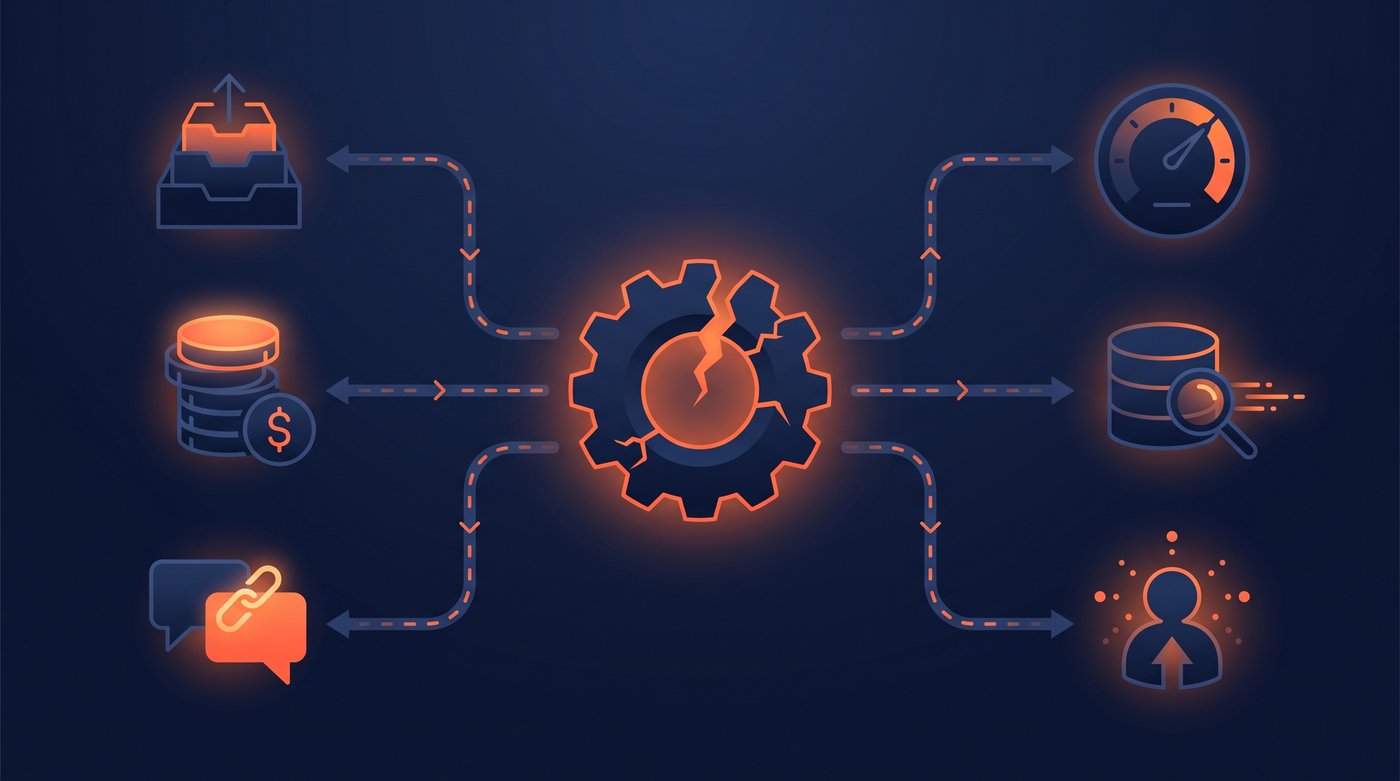
If your reason isn't in the table, you probably don't have a migration problem. You have a copy problem or a list problem, and both follow you to any new sender.
What is Instantly?
Instantly is a cold email platform for teams that send a lot of email. You connect Gmail, Outlook, or SMTP inboxes, turn on warmup, and run multi-step email sequences. Replies land in one shared inbox called Unibox. A separate credits subscription adds a database of 450M+ B2B contacts, email enrichment, and AI agents that write replies or find leads.
It suits agencies and outbound teams that send from many inboxes at once. If you send a few dozen emails a week from one Gmail account, most of what you'd pay for goes unused.
Instantly pros and cons
Here's what Instantly does well:
- Every Outreach plan includes unlimited email accounts and unlimited warmup, starting at $47 a month.
- Hypergrowth sends up to 125,000 emails a month for $97, one of the best volume deals in cold email.
- Lead search, enrichment, AI reply drafting, and sending live in one app, so you don't have to move CSV files between tools.
- Bundles combine sending and credits at 10% off on annual billing.
Here's where people run into trouble:
- Lead data is a separate subscription, so the $47 headline isn't the cost of a working setup.
- On the Growth plan, Unibox is preview only. Replying from Unibox, and webhooks, start on Hypergrowth.
- There are no overage charges. When you pass a plan's limit, you move up a tier, and the step from Growth to Hypergrowth doubles the bill.
- Credits on monthly plans expire two months after purchase if you don't use them.
How much does Instantly cost?
Instantly sells two products, Outreach for sending and Instantly Credits for lead data and AI. You buy them on their own or as a bundle. Here's what the pricing page showed on October 3, 2026:
| Product | Plan | Monthly | Billed annually (per month) | What you get |
|---|---|---|---|---|
| Outreach | Growth | $47 | $37.60 | 5,000 emails, 1,000 uploaded contacts, unlimited accounts and warmup |
| Outreach | Hypergrowth | $97 | $77.60 | Up to 125,000 emails, 25,000 contacts, replies from Unibox |
| Outreach | Light Speed | $358 | $286.30 | 500,000 emails, 100,000 contacts, dedicated server and IP rotation |
| Credits | Growth | $47 | $37.60 | 1,500 to 2,000 credits a month |
| Credits | Supersonic | $97 | $87.30 | 5,000 to 7,500 credits a month |
| Credits | Hyper Credits | From $197 | $177.30 | 10,000 to 200,000 credits a month |
| Bundle | Starter | $94 | $85 | 5,000 emails, 1,000 contacts, 1,500 credits |
| Bundle | Scale | $194 | $175 | 100,000 emails, 25,000 contacts, 5,000 credits |
| Bundle | Agency | $555 | $500 | 500,000 emails, 100,000 contacts, 10,000 credits |
Two details are worth checking at checkout. The Hypergrowth card lists 125,000 emails on monthly billing but 100,000 on the annual card. And an Outreach add-on at $87 a month adds 25,000 contacts and 125,000 emails to Hypergrowth and higher plans. A small Nano credits plan also exists at $9 for 150 credits.
The $47 price is real, but it covers sending only. Budget from the bundle that matches what you'll actually use.
What a team of three pays in year one
Here's a three-person team that sends a few thousand emails a month and needs contacts to send to. These setups buy different things, so read the "How we got it" column before you compare totals. All figures are estimates built from annual pricing where it exists. They leave out domains, mailboxes, and tax.
| Setup | Year-one cost (estimate) | How we got it |
|---|---|---|
| Instantly Starter bundle | $1,020 to $1,382 | $85 a month × 12 for 5,000 emails and 1,500 credits. To reply inside Unibox you need Hypergrowth ($77.60) plus Growth credits ($37.60), which comes to $1,382 |
| Smartlead Base | $390 to $1,098 | $32.50 a month × 12 for sending. Adding the $59 monthly verified-email add-on for 12 months brings it to $1,098 |
| Saleshandy Pro | $912 | Starter allows one user, so three people need Pro: $76 a month × 12, with 100,000 emails and 4,000 lead credits a month |
| Signado Starter plus Instantly Growth | $1,159 | Signado $59 × 12 = $708 for the whole workspace, no seats, 2,500 credits a month. Instantly Growth at $37.60 × 12 = $451 does the sending |
| Apollo Basic | $1,764 | $49 per seat a month billed annually × 3 seats × 12 |
Per-seat pricing is the line that moves fastest. Apollo's total grows with every hire. Smartlead, Saleshandy Pro, and Signado don't charge per person, and Instantly's plans include team invites.
Why do people look for an Instantly alternative?
The bill is the most common reason. The $47 plan covers email, but lead data is a second subscription, and replying from Unibox needs the $97 plan. Some people see warmup scores that look healthy while campaigns land in spam. Others want LinkedIn in the same sequence, or simply more replies from the same list.
The billing complaint shows up in plain words. On Trustpilot, a September 2026 review is titled "Decent for warmup and sending but everything else is extra." Another reviewer wrote that once you're on a paid plan, "CRMs, inbox placement tools, and almost everything else are locked behind additional paywalls." Neither says the sending is bad. They say the total cost surprised them.
The second complaint is warmup trust. Cold emailers on Reddit have threads like "Instantly Warmup Score vs Reality" and "Rant: Instantly". In Salesforge's 30-day test, three inboxes showed heat scores above 85 at day 14, yet a placement test found 32%, 38%, and 41% of their mail in spam. Salesforge sells a competing platform, so weigh that test with care. Instantly's own warmup guide agrees on the basic point: the health score "reflects warmup placement only and does not measure campaign placement." If deliverability is the real project, start with our guide to email warm-up tools before you migrate anything.
The third reason is channel. Instantly's sequence editor is built around email steps. One of its AI agents runs email and LinkedIn touches together, according to its product page, but if you want to build LinkedIn steps yourself, a multichannel tool fits better.
Instantly is still good at what it was built for: high-volume email sending at a fair price. The trap is misdiagnosis. When campaigns clear the spam folder and still meet silence, the sender didn't fail. The list did. A new platform or a new AI agent won't change that, because pointed at a cold list, it just sends the same silence faster.
How we compared Instantly alternatives
We checked every price on the vendor's own pricing page on October 3, 2026, with monthly and annual billing side by side. For each tool, we looked at what it changes compared with Instantly, what a small team pays to start, and the one limit most likely to change your choice. User complaints come from Trustpilot reviews and r/coldemail threads, linked where we quote them. Signado is our product, and it's held to the same price and limit checks as the rest.
The 6 best Instantly alternatives in 2026
1. Smartlead: the closest like-for-like for high-volume senders
Ask a cold email forum for an alternative to Instantly and Smartlead usually comes back first. The two share a playbook: many inboxes, automatic rotation, warmup in the loop, volume as the strategy. What changes is how you pay.
Smartlead prices every tier by sends. Base costs $39 a month for 6,000 sends and 2,000 contacts. Pro runs $94 for 90,000 sends, Unlimited Smart $174 for 150,000, and Unlimited Prime $379 for 500,000. Annual billing takes 17% off, so Base drops to $32.50 and Pro to $78.30. Verified prospect emails are a $59 monthly add-on on Base and Pro, and come included on Smart and Prime. CRM access, the API, and webhooks start on Pro.
The win is a bill you can read. One tier prints one send cap, and the invoice tracks the meter instead of the catalog. Every plan includes unlimited email accounts, so adding inboxes doesn't add cost.
Test it the simple way. Move one campaign for two weeks with the same list, the same copy, and the same inboxes. Then compare inbox placement and reply rate. If the numbers match, you've learned the problem isn't the sender. A like-for-like swap gives roughly the same campaign results with a different logo on the dashboard, plus a migration that takes weeks and that nobody pays you for.
Pick Smartlead when sending mechanics really are the constraint, monthly volume drives your cost, and you want tiers that print their caps up front.
Instantly vs Smartlead
This head-to-head comes up often in cold email threads. Instantly wins on volume at the top: Hypergrowth carries up to 125,000 monthly emails for $97, against Smartlead Pro's 90,000 for $94. Smartlead wins at the entry level: Base sends 6,000 emails for $39, against Instantly Growth's 5,000 for $47. Lead data costs extra on both. Instantly Credits start at $47 a month, and Smartlead's verified prospect emails are a $59 add-on on its two lower plans. Stay with Instantly if bundled volume and Unibox serve you. Move to Smartlead if you want one tier, one printed cap, and nothing else on the invoice.
2. Saleshandy: sending and lead credits on one predictable bill
Some teams don't want unlimited anything. They want one small invoice that covers both the sending and the contacts. Instantly splits those into two subscriptions. Saleshandy puts them on one plan ladder.
Starter costs $41 a month, or $34 billed annually ($408 a year). It includes 6,000 emails, 2,000 active prospects, and 1,500 Lead Finder credits a month for one user. Pro is $99 monthly or $76 annually, with 100,000 emails, 30,000 prospects, 4,000 credits, and up to 10 users. Scale is $189 or $149, with 200,000 emails, unlimited users, 8,000 credits, and white label for agencies. One credit reveals a verified email, and six reveal a phone number. Every plan includes unlimited email accounts and warmup.
Its edge is the shape of the bill. Seats come with the plan and are never billed per user. You also pay nothing for an email lookup that doesn't come back verified. A fixed cap you understand beats an unlimited promise you have to watch.
Check two things before you commit. Starter allows one user, so a team of three lands on Pro. And monthly billing costs 21% to 30% more than annual, so decide if you'll commit for a year to get the price that caught your eye. The free trial lasts 7 days, needs no card, and caps trial sending at 100 emails.
Pick Saleshandy when you want sending and lead data on one predictable bill and your volume fits a fixed tier.
3. Signado: fix the list, keep the sender
Keep Instantly. If your mail lands and nobody answers, the list is the problem, and Signado fixes the list. It finds people who just posted or commented about your market on LinkedIn, shows you what they said, and sends them to your Instantly campaign with a first line built on their own words.
The difference shows up in replies. In our own LinkedIn outreach test, messages that opened from a recent post or comment got 78 replies from 149 messages. Classic Sales Navigator targeting got 25 replies from 139. That's 2.9 times the reply rate, and the full method and numbers are public.
Signado is a lead generation tool for agencies, consultants and B2B teams that sell go-to-market, digital marketing or AI services. It watches the conversations in your market on LinkedIn and tells you who to contact and what to say.
Here's how warm lead discovery works. You add keywords your buyers use, creators they follow, or competitors they watch, or you paste one post. Signado finds the people posting and commenting there, checks the person and the company, and gives each lead a score for how well they match your business. The exact comment stays attached. There's no LinkedIn login. The built-in email finder adds the address, the AI draft opens on what the person said, and Send via Instantly pushes the rows into the campaign you choose, with variables mapped and duplicates skipped.
Why does that change the result? A contact list tells you who exists. A comment from last week tells you what someone cares about now. These are warm leads, and your opener answers something real instead of filling a merge field.
Credits meter everything at flat public rates. Finding, enriching, qualifying, and scoring a new warm lead costs 5 credits. An email address costs 5, an AI-drafted message 3, and a Deep Dive 40. A Deep Dive checks one account's funding, hiring, leadership changes, and company news before an important send. Lite is $29 a month with 1,000 credits, enough for 100 new warm leads with emails found. Starter is $59 with 2,500 credits, Growth $99 with 5,000, and Scale $349 with 20,000. Pricing is per workspace, not per seat. Every paid plan starts with a 7-day trial that includes the plan's full credits. A card is required, and you can cancel anytime.
Pair it with Instantly or Smartlead for high-volume sending. For smaller batches, Signado can also send through Gmail or your own SMTP.
Run one test this week. Add one source, review the leads for a few days, and push the best 50 into a new Instantly campaign next to your usual list. Use the same inboxes and the same follow-ups, then compare replies after two weeks.
Pick Signado when deliverability holds and replies don't. People who just raised the topic beat a better sender every time the mail was already landing.
4. Lemlist: multichannel when email alone stops working
A buyer who ignores your fourth follow-up email will often answer a LinkedIn message the same afternoon. When that's your market, add a second channel to the same sequence instead of shopping for a better sender. Lemlist is the established pick for that.
The Email plan costs $69 a month, or $55 billed annually. It includes unlimited users, 50,000 emails a month, warmup, and a lead database of 650M+ contacts. Multichannel costs $109 a month per user, or $87 annually. It adds LinkedIn profile visits, invites, messages, voice notes, and InMail, plus SMS and a built-in dialer. WhatsApp is an add-on, and Enterprise is custom. Both plans come with a 14-day free trial and no card.
What it wins is the multichannel sequence: an email, a profile visit, a connection note, each step aware of the last. Personalization gets easier when the prospect has already seen your name in two places before you ask for anything.
The per-seat math deserves a pause. Multichannel is priced per user, so five people cost $545 a month at the monthly rate, a different league from flat-price sending. LinkedIn automation also carries account risk that pure email outreach doesn't.
Pick Lemlist when reply rate per prospect matters more than sends per dollar, and your buyers clearly live on LinkedIn. If Lemlist itself is the tool you're rethinking, our Lemlist alternatives guide covers that decision.
5. Woodpecker: usage-based pricing and per-client agency billing
Agencies bill clients one by one, then buy software in bundles that map to nothing. Woodpecker prices cold email the way agencies price it: by contacted prospects. The headline rate is $7 per 100 contacted prospects. The smallest tier, 500 prospects and 8,000 emails a month, costs $35 monthly or $280 a year. The next step, 2,000 prospects, costs $67 a month. Annual billing saves 33%.
Every tier includes unlimited email accounts, unlimited team members, unlimited email verification, and free warmups. Add-ons are specific. LinkedIn costs $29 a month per connected account. The Agency Panel costs $27 a month per active client, and white label adds $5 per client.
It fits agencies managing several clients with uneven volume. An active client bills by prospects actually contacted. A paused client costs almost nothing to keep set up. Per-client billing also makes pass-through invoices easy for clients to read, which matters more than most tools admit.
The catch is that your price is a calculator result, not a number printed on a plan card. Run the calculator on a real quarter of client volume, with the LinkedIn and per-client panel fees included, before you quote margins to anyone. The trial runs 14 days or 100 emails, with no card.
Pick Woodpecker when client count changes month to month, billing transparency wins deals, and per-prospect pricing beats bundles at your real volume.
6. Apollo: lead database and sender in one subscription
There's a quieter line item in most Instantly setups: the list itself. If one subscription buys contacts and another sends to them, Apollo's argument is that one all-in-one platform can hold both.
Apollo prices per seat. Basic costs $49 per seat a month billed annually, or $65 monthly, with 30,000 credits per seat per year. Professional costs $79 annually or $99 monthly, with 48,000 credits. Organization costs $119 annually with a three-seat minimum and 72,000 credits. Basic already includes unlimited sequences, email warmup, and mailbox purchasing. There's also a Free plan with two sequences.
The payoff is fewer moving parts. You search the contact database, build the segment, and run the email outreach under one login and one invoice. For teams tired of syncing CSV files between a data provider and an outreach tool, that's a real change. See where Apollo sits among B2B sales intelligence tools before you move the whole workflow to one vendor.
The trade is depth. Sending is one feature inside a big suite, and teams pushing serious volume often pair Apollo's data with a dedicated sender anyway. Per-seat pricing also grows with headcount in a way flat-price plans don't. Our Apollo.io alternatives guide maps those edges in detail.
Pick Apollo when one login is the goal, volume is moderate, and cancelling your separate contact database would pay for the switch.
When does it make sense to stay on Instantly?
Stay when sending works. If your campaigns land in the inbox, your cost per meeting is acceptable, and your complaints are wishes rather than blockers, a migration gains you nothing. It costs you weeks of rebuilding campaigns, integrations, and sending history.
The case for staying deserves more than a line, because most reviews of Instantly competitors are written by the competitors. Every plan includes unlimited accounts and warmup, and Hypergrowth's 125,000 emails for $97 is hard to beat on volume. The modular catalog that feels like a trap when you buy it all at once works as a growth path when you add pieces only as a real need shows up: credits for the 450M+ contact database first, then a CRM, then placement testing.
So run a mechanics check before any migration. Verify your DNS records, keep domains off blacklists, ramp volume slowly, watch sender reputation, and answer replies fast. If all of that holds and prospects still don't answer, the problem isn't the sender. Rewriting the message is a much cheaper experiment than switching platforms, and a set of cold email templates costs an afternoon. If new copy on the same list still gets nothing, the list is the problem, and the fix sits before the sender.
Which Instantly alternative should you choose?
Your own send data picks the winner, whatever any list says, including this one. Pull last quarter's campaigns, sort the misses into mechanics, cost, channel, and list, then use this table:
| If your problem is | Start with | Why |
|---|---|---|
| Sending mechanics or the billing model | Smartlead | Same playbook, tiers metered by sends |
| Two subscriptions for sending and leads | Saleshandy | Sending and lead credits on one plan, seats included |
| Mail lands, nobody replies | Signado | Finds people already talking about your topic and feeds them to Instantly |
| Buyers answer on LinkedIn | Lemlist | Email and LinkedIn steps in one sequence |
| Agency billing across clients | Woodpecker | Pays per contacted prospect, panel per client |
| Contacts and sending in one login | Apollo | Contact database plus sequences per seat |
| Sending works and cost per meeting is fine | Stay on Instantly | Unlimited inboxes and warmup on every plan |
For a wider look beyond sending, our roundup of B2B lead generation tools uses the same logic across the whole process, from finding people to sending.
Before you open a single trial this week, write down the one thing you need to change. Then trial only the tool that wins on that one need. If the answer is the list, Signado's 7-day trial can feed its first warm leads straight into the Instantly account you already run.
FAQ
What's better than Instantly?
No tool is better for every team, so test instead of guessing. Split one campaign between Instantly and one challenger for two weeks, with the same list segment and the same copy, then compare inbox placement and reply rate. If none of the six tools here fit, Reply.io and Snov.io are worth adding to the shortlist. If the mail lands and replies still don't come, change the list before you change the sender.
Can I use Instantly AI for free?
Only for 14 days. Instantly's free trial needs no credit card and includes 250 uploaded contacts, 1,000 emails, and 100 credits, and you can connect up to two email accounts. When the trial ends, campaigns and warmup pause, and trial accounts that never upgrade are deleted. Two weeks is enough to learn the interface. It's too short to judge deliverability, because warmup alone takes about that long.
What is Instantly AI used for?
Mostly cold email at volume. Teams connect many sending inboxes, let Instantly warm them up, and run multi-step email sequences, with replies collected in one inbox called Unibox. Paid credits add a contact database of 450M+ B2B leads, email enrichment, and AI agents. The AI Reply Agent, for example, uses 5 credits per reply it writes.
Is cold email still effective in 2026?
Yes, but plan for low single digits. Instantly's 2026 Cold Email Benchmark Report puts the average reply rate at 3.43% for emails sent from January 1 to December 18, 2025. The top quarter of senders passed 5.5%, and the top 10% passed 10.7%. The same report found that 58% of replies come from the first email, so who you write to and how you open matter most.
Is there a free Instantly alternative?
Apollo's Free plan is the most usable no-cost start. It gives 75 credits per seat a month and two sequences, enough to test the workflow but not to run real campaigns. A plain Gmail account covers a founder's first manual conversations. Lemlist and Woodpecker offer 14-day trials without a card, and Saleshandy offers 7 days. Free plans test fit. Scale costs money everywhere.
Is Instantly a CRM tool?
Partly. Instantly sells a CRM for replies and deals, and its CRM page says you can start free, with unlimited seats in one subscription. The main pricing page doesn't list CRM tiers, so check the price in the app before you rely on it. If you already run HubSpot or Salesforce, keep it as the system of record and send replies there through an integration.
Choose LinkedIn prospecting tools
Compare search, research, and automation tools by the job you need done and the account access they require.
Start with the LinkedIn prospecting tools guide6 Best Lemlist Alternatives for 2026 (and What They Cost)
Compare 6 Lemlist alternatives by price, channels, and main limit, with year-one costs for a team of three. Prices checked on vendor pages in October 2026.
Read article7 Best HeyReach Alternatives in 2026: Prices and Which One Fits
Compare 7 HeyReach alternatives by the reason you're switching, with October 2026 prices, a year-one cost table for three people, and when to keep HeyReach.
Read article9 B2B lead generation tools for finding clients on LinkedIn
Compare nine B2B lead generation tools by the problem they fix, the result to test, and the smallest useful stack for finding clients on LinkedIn.
Read articleThese tools all assume you know who to contact
Signado fills that gap: it finds the people already talking about what you do on LinkedIn, with what they said attached. Use it alone or feed the rest of your stack.