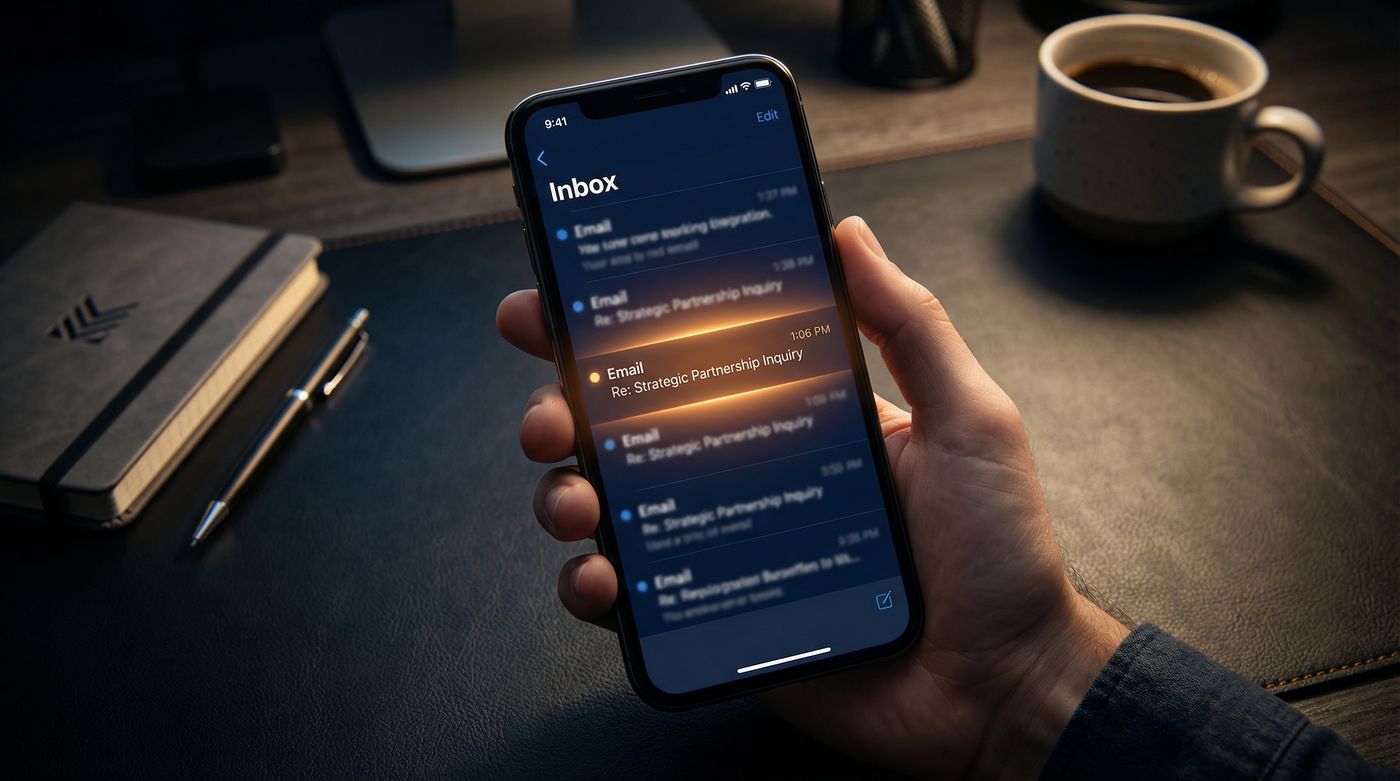
TLDR: The best cold email subject lines are short, lowercase, and tied to a real buyer context. Start with 2-4 words, avoid sales language, and use the 50+ examples below by trigger, industry, and role. Strong subject lines help opens; relevant first lines and follow-ups earn replies.
The best cold email subject lines read like internal emails: short, lowercase, and about something the prospect already cares about. Not "Exclusive offer for [Company]!" but "quick question about your hiring push." Gong's analysis of 85 million cold emails found that subject lines with 1-4 words, all lowercase, and zero selling language hit 58%+ open rates. That's more than double the industry average.
Most subject line advice recycles the same marketing playbook: use the first name, keep it brief, add urgency. Follow that advice and you'll land exactly where everyone else does, around a 23% open rate. Generic subject lines get generic results. The subject lines that hit 50-60% follow a different pattern. They pass what I call the "internal camouflage" test. If a colleague had sent this email, would the subject line look normal? If a salesperson clearly wrote it, it gets ignored.
This guide breaks down cold email subject line best practices from large send datasets, gives you 50+ examples organized by use case, industry, and buyer role, and covers the mistakes that send your cold outreach straight to the spam folder.
What you'll learn
- What makes a cold email subject line work
- How long should subject lines be
- Words that boost and kill open rates
- 50+ subject line examples with 50%+ open rates
- Industry-specific subject lines
- Role-specific subject lines
- The 30/30/50 rule for cold emails
- How to write a subject line step by step
- How to A/B test your subject lines
- Mistakes that send emails to spam
- FAQ
What makes a cold email subject line work?
Internal camouflage: mirror your buyer's inbox
Open your own inbox right now. Look at the emails from colleagues. They're short. Lowercase. Boring. "re: vendor list" or "thoughts on Q3 plan?" That's what your prospect's inbox looks like too. Cold emails that mimic this pattern slip past the mental filter that sorts every email into "real" or "sales pitch" within a fraction of a second.
Internal camouflage means your subject line doesn't capture attention by being loud. It captures attention by blending in. It doesn't trigger the recipient's sales-detection instinct. No title case. No exclamation marks. No "I'd love to" or "Quick call?" phrasing that screams cold outreach. When a subject line reads like it came from inside the company, the prospect opens it before the brain's spam filter kicks in.
This is why buying signals matter so much for subject line performance. A subject line that references something the prospect is already dealing with (a recent hire, a funding round, a product launch) doesn't just pass the camouflage test. It passes the relevance test. The recipient thinks "someone inside my world sent this" rather than "a salesperson found my email." (Teams that want to automate this step of the workflow can compare the 10 best B2B sales intelligence tools we reviewed.)
The same logic applies to lead temperature. If you cannot explain why the prospect is a warm lead in one sentence, the subject line will usually feel generic no matter how clever it is.
The data on length, case, and language
Gong's research team analyzed 85 million B2B cold emails and found three variables that predict whether a subject line gets opened.
Length is the biggest factor. Subject lines with 1-4 words outperformed every other length bracket. ColdMailOpenRate's independent study of 5 million emails confirmed this, finding that 21-40 characters hit a 62.4% average open rate, the highest of any character range.
Capitalization matters more than most people think. All-lowercase subject lines won across Gong's dataset, and they consistently increase open rates compared to Title Case or Sentence case alternatives. Lowercase reads as casual and internal. Title Case reads as marketing.
Selling language is the biggest killer. Gong found that salesy techniques in the subject line (words like "demo," "free," "save," "offer") reduced open rates by 17.9%. The subject line's only job is getting opened. Selling in the subject line does the opposite.
How long should cold email subject lines be?
The sweet spot is 1-4 words and 21-40 characters. Gong's analysis of 85 million emails found 1-4 word subject lines outperform longer alternatives, and ColdMailOpenRate's study of 5 million emails measured 21-40 characters at a 62.4% average open rate, the highest of any range tested.
Those two data points point to the same conclusion: shorter wins. But there's a practical reason beyond the data. Mobile email clients truncate subject lines around 30-40 characters on most devices. Over half of all emails get opened on mobile (Litmus Email Analytics). If your subject line gets cut off mid-word, you've lost the context that makes someone open the email.
What about the ultra-short approach? Gong found that completely empty subject lines boost open rates by about 30%. Curiosity works. But there's a catch: reply rates drop 12%. People open out of confusion, not interest. They read the email, realize it's a cold pitch, and close it. If you're optimizing for replies (and you should be), blank subject lines are a gimmick.
Keep your cold email subject line straight to the point. Four words or fewer. Lowercase. If it looks like something a colleague would type on their phone between meetings, you're in the right range.
The 2-4 word rule
Belkins analyzed 5.5 million cold emails with Reply.io and the winner was obvious: 2-4 word subject lines hit 46% open rates. One-word subjects? 38%. Past 9 words, you're down to 34%.
Think about your own inbox. Internal emails have subject lines like "pipeline coverage" or "new hire ramp." Two, three words. Nobody writes "Exploring potential synergies between our organizations" to a coworker. Cold emails that look like internal emails get treated like internal emails.
Examples that consistently hit above 45% opens:
- "SOC 2 question"
- "pipeline coverage"
- "security review"
- "your open AE roles"
They're all about what the prospect is dealing with, not what you're selling. They could be a Slack from someone on their team.
Not sure what to test on a new campaign? Start here. Two or three words that describe what your prospect is working on right now.
What words boost (and kill) open rates?
Salesy techniques in a cold email subject line reduce open rates by 17.9%, according to Gong's 85-million-email analysis. Words like "exclusive," "limited time," "opportunity," and "partnership" signal that a salesperson wrote the email. The prospect doesn't even need to read the body.
Here's a useful framework from 30MPC's breakdown of the Gong data: replace sales pitch language with priority-based language. Instead of talking about what you sell, reference what the prospect is already working on.
A sales email subject line like "Boost your sales pipeline by 40%" talks about your product. A subject line like "your SDR hiring plan" talks about the prospect's priorities. The first one gets filtered. The second one gets opened because it's relevant and timely.
Words and phrases that consistently hurt open rates include "partnership opportunity," "save," "discount," "limited offer," "exclusive," and "introducing." These read like marketing emails, not like a message from someone who has done your research on the recipient's world.
Words that work tend to be plain, specific, and tied to the prospect's situation. Company names, role titles, specific projects, industry terms they'd use internally. The best subject line doesn't try to be clever. It just sounds like it belongs in the buyer's inbox.
Capitalization follows the same logic. All lowercase performs best in Gong's data because lowercase is how people write quick internal emails. ALL CAPS subject lines don't just look aggressive. Many email providers flag them as spam triggers, which means your email may never reach the inbox at all.
50+ cold email subject line examples that get 50%+ open rates
ColdMailOpenRate identified 47 subject lines with 60%+ open rates from their database of millions of sends. Buzzlead's analysis of 1 million+ emails found similar patterns. The examples below are organized by category, each grounded in the data patterns that drive opens.
Signal-based subject lines
These are the highest-performing category because they reference something real that happened at the prospect's company. When a subject line connects to an event the recipient already knows about, it passes both the relevance and the camouflage test.
"congrats on the series b" Ties to a public event. The prospect knows their funding was announced. This reads like a genuine congratulations, not a cold pitch.
"saw you're hiring 5 SDRs" References a specific, verifiable detail. The recipient knows this is true, which creates instant credibility.
"your product launch last week" Timely and specific. The recipient is still thinking about the launch, so the subject line feels relevant.
"the new CRO role" References a leadership change. Short, direct, and about something the prospect's company is experiencing right now.
"noticed your expansion into EMEA" Connects to a firmographic event. The prospect is dealing with this operationally, so the email feels like it could be from a colleague or partner.
"re: your linkedin post on scaling" References specific executive LinkedIn activity. This is especially effective because it shows the sender engaged with the prospect's content.
"your open AE roles" Direct, specific, about the prospect's priorities. Two words do the work that most subject lines need ten for.
This is where context connects directly to email performance. If you find a potential client in a relevant LinkedIn conversation, the subject line can reference the problem, question, or change they already described. The result is a compelling subject line the recipient recognizes as relevant.
Question-based subject lines
Questions position the prospect as the expert. They pique curiosity without being manipulative. Gong's data shows question-based subject lines perform well because they create an open loop the recipient wants to close.
"quick question about [specific topic]" The "quick question" formula is one of the most tested patterns in cold outreach. It works because it's low-commitment and positions you as seeking the prospect's expertise.
"how are you handling [specific challenge]?" Speaks to a pain point the prospect is likely facing. Replace the bracket with something specific to their industry or role.
"[company name] + [your company] ?" Short, intriguing, and implies a potential connection. The question mark does the heavy lifting.
"thoughts on [industry trend]?" Positions the email as a peer conversation, not a sales pitch. Works best when the trend is genuinely relevant to the recipient's role.
"who handles [function] at [company]?" This one works differently. It gets opened because the recipient wants to either answer or redirect. Either way, you've started a conversation.
"is [specific problem] still a priority?" Direct, relevant, and gives the prospect an easy yes/no mental answer that compels them to open.
Pattern interrupt subject lines
Ultra-short subject lines break inbox monotony. When every other email has a 6-10 word subject line, a one or two-word line stands out.
"thoughts?" One word. Reads like a follow-up to an existing conversation. ColdMailOpenRate data shows this pattern consistently hits above 60% open rates.
"[company name]" Just the prospect's company name. Nothing else. It demands attention because it could be about anything.
"quick one" Casual, brief, colleague-like. This captures attention because it's the kind of thing you'd get from your VP on a Tuesday afternoon.
"hi" Controversial but effective for open rates. Gong's empty-subject-line data suggests that minimal subject lines create curiosity. The risk is low reply rates if the body doesn't deliver.
"for you" Two words. Implies something specific was prepared for the recipient. Works as a pattern interrupt because it's vague enough to demand opening.
"idea" Single word. Implies value. Reads like an internal brainstorm rather than a cold email.
"[first name]" Just their name. Unusual enough to get opened because the prospect wonders what it's about. Use sparingly: it only works once.
Referral and social proof subject lines
Name-dropping a mutual connection is the closest thing to a guaranteed open. It transforms cold outreach into warm outreach in two words.
"[mutual connection] suggested I reach out" The gold standard. If the connection is real, this gets opened nearly every time. Mailchimp's data shows that personalization dramatically affects open rates, and mutual connections are the strongest form.
"[name] at [company] mentioned you" More specific than a generic referral. Naming both the person and their company adds credibility as social proof.
"fellow [group/community] member" Works when you share a genuine community (YC founders, Pavilion members, industry Slack groups). Feels like an in-group message.
"saw your talk at [event]" References a specific, public appearance. The prospect knows they gave the talk, so the subject line has instant credibility.
"[competitor name] customer?" Bold but effective. Creates curiosity and implies you have something relevant to their current vendor relationship.
"we both know [mutual connection]" Casual, direct. Works when you have a genuine mutual contact but they didn't explicitly refer you.
Benefit-first subject lines
These lead with what the prospect gets. The key is specificity. Generic benefits ("grow your revenue") get filtered. Specific benefits tied to the prospect's situation get opened.
"cut [specific metric] by [specific %]" Only works when the numbers are real and the metric matters to the recipient's role. A VP of Sales cares about ramp time. A CFO cares about CAC.
"[company name]'s [metric] vs industry avg" Creates curiosity by implying you have data about their company. The prospect wants to know where they stand.
"saving [similar company] 12 hours/week" Social proof plus a specific benefit. The named company should be a recognizable peer, not a random logo.
"[role title]s are solving [problem] with this" Peer validation. The recipient identifies with the role title and wants to know what their peers are doing.
"reduce [specific bottleneck] before Q3" Time-bound and specific. Works when you can tie the benefit to a known business cycle.
"what [competitor] changed last quarter" Competitive intelligence is irresistible to most B2B buyers. This offers a clear value proposition in the subject line itself.
Re-engagement and breakup subject lines
For prospects who've gone cold or follow-up attempts that need a different approach. The full playbook for cold email follow-up timing and sequencing goes deeper, but these subject lines handle the re-engagement itself.
"did I lose you?" Human, direct, not aggressive. This subject line works for the second or third follow-up email because it acknowledges the silence without being passive-aggressive.
"closing your file" The breakup email. Creates fear of missing out (fomo) without being manipulative. The prospect either re-engages or you move on.
"one last thing" Implies finality. Works as a final attempt because it tells the prospect this is the last email they'll receive.
"still thinking about [topic from original email]?" Ties back to the original conversation. Shows persistence without repetition.
"figured you're busy" Empathetic, no pressure. Acknowledges reality and gives the prospect an easy re-entry point.
"bumping this" Two words. Reads exactly like an internal follow-up. No sales language, no pressure, just a nudge.
"should I close this out?" Gives the prospect control. They can say yes (and you stop) or re-engage. Either outcome is useful for both sides.
Industry-specific subject lines
Generic subject lines treat every prospect the same. Industry-specific ones use vocabulary the prospect hears in their own meetings. A fintech compliance officer and a SaaS VP of Sales live in different worlds. The subject line should sound like it came from theirs.
"your SOC 2 timeline" For SaaS and cybersecurity prospects. SOC 2 is a pain point that companies at a certain stage all deal with. If you know they're going through it, this reads like an internal project update.
"PCI scope creep?" Fintech and payments. Scope creep on PCI compliance is a specific, expensive problem. Two words that signal you understand their world.
"post-launch attribution" For ecommerce and DTC brands. After a product launch or campaign, attribution is the first thing marketing leads check. This reads like a colleague following up on results.
"your HIPAA vendor review" Healthcare and healthtech. HIPAA vendor reviews are a recurring compliance obligation. Referencing one in progress shows familiarity with their operational calendar.
"Q4 pipeline gap" Works across B2B but especially for revenue leaders at SaaS companies. Q4 is when pipeline gaps become urgent. Timing this to late Q3 or early Q4 makes it feel like an internal escalation.
"cloud migration blockers" For IT and infrastructure prospects. Migration projects always have blockers. This subject line identifies with a frustration the prospect is living right now.
Role-specific subject lines
The same company can have five decision-makers, and each one cares about different things. A CEO thinks about growth. A VP of Sales thinks about quota. An SDR manager thinks about rep ramp time. Your subject line should match the inbox it's landing in.
"your reps' ramp time" For SDR managers and VP of Sales Enablement. Ramp time is a metric they track and stress about. This reads like a peer conversation about a shared problem.
"board deck gap" For founders and C-suite. Before a board meeting, there's always a slide that isn't ready or a metric that needs explaining. This is the kind of thing a board member or advisor might send.
"your demand gen attribution model" For marketing directors and VPs. Attribution is the perennial headache. The specificity signals that you understand their function well enough to name the problem by its real name.
"CFO pushback on [tool category]" For VP-level buyers who need budget approval. CFO pushback is something every VP has experienced. Naming it directly creates instant recognition.
"CSM-to-rep handoff" For revenue operations and customer success leaders. The handoff between CS and sales is a process problem that rarely gets solved cleanly. Two words that identify a specific operational pain.
"scaling past 10 reps" For VP of Sales and CROs at growth-stage companies. The jump from 10 to 25 reps breaks processes that worked at smaller scale. This subject line targets a company milestone the prospect is likely navigating.
What is the 30/30/50 rule for cold emails?
The 30/30/50 rule splits cold email success into three components: 30% depends on the subject line (getting someone to open your email), 30% on the email body and email copy (getting read), and 50% on follow-up persistence (getting replied to). The percentages add up to more than 100% because follow-ups compound on the work of the initial email.
This rule matters for subject line strategy because it puts your first email in perspective. Your subject line is responsible for about a third of the outcome. That's significant, but it also means the world's best subject line won't save a weak email body or a non-existent follow-up sequence.
The practical takeaway: don't spend 90% of your time perfecting subject lines and 10% on everything else. Allocate effort proportionally. Write a good subject line that passes the internal camouflage test, then invest equal energy in the first line of your email body and your follow-up cadence.
Sales teams that obsess over subject lines while ignoring follow-up timing leave the biggest lever on the table. The 50% attributed to follow-up isn't just about sending more emails. It's about timing those follow-ups to align with when the prospect is most likely to engage.
How to write a cold email subject line (step by step)

Step 1: Research the prospect's world
Before you write a single word, you need context. What's happening at the prospect's company right now? Check LinkedIn for recent posts, job changes, and company updates. Look at sales trigger events: funding rounds, leadership changes, hiring surges, product launches, partnership announcements.
The goal is to find something the prospect is already thinking about. A subject line that references a real event at their company will always outperform a generic template. If you find that the company just raised a Series B, your subject line writes itself. If you find nothing, move to the next prospect on your email list. Relevance beats volume. For the full email body to pair with these subject lines, see our cold email templates.
Signal monitoring tools automate this research. Instead of manually checking LinkedIn and Crunchbase for each prospect, tools like Signado track what buying signals are firing across your target accounts and surface them in a prioritized feed. When a trigger fires, you have the context for an attention-grabbing subject line that references something specific.
Step 2: Pick a formula
Match your formula to what you found in research.
Found a trigger event? Use the signal-based formula: reference the event directly. "congrats on the series b" or "saw the new VP Sales hire."
Have a mutual connection? Use the referral formula: "[name] suggested I reach out."
Found nothing specific? Fall back to the question formula: "quick question about [their function]." It's the safest default because it positions the prospect as the expert and asks for minimal commitment.
Found a specific pain point from their LinkedIn activity or job postings? Use the benefit formula tied to their specific challenge.
The formula is a starting point, not a template. Adapt the language to match how the prospect's industry talks. A subject line for a fintech CFO should sound different from one for a marketing director at a DTC brand.
Step 3: Write 3 variations
Never send just one version. Write at least three variations of your subject line, each testing a different angle. One might reference the trigger event. Another might use the question formula. A third might be an ultra-short pattern interrupt.
This isn't just good practice for A/B testing. It forces you to think about the email from multiple angles, which often reveals a better approach than whatever you wrote first.
Keep all three short. If any variation goes past five words, rewrite it. Check each one against the inbox test in Step 4 before sending.
Step 4: Apply the inbox test
Read your subject line as if a colleague sent it. Does it look normal? Would you open an email with this subject line if it showed up between a message from your manager and a calendar invite? If yes, it passes. If it looks like something a salesperson wrote, rewrite it.
The inbox test catches the subtle tells that data alone won't flag. Exclamation marks look fine in isolation but scream "sales" in a crowded inbox. Title case is grammatically correct but visually out of place between lowercase internal emails. A good email subject line doesn't draw attention to itself. It just gets opened.
How to A/B test your subject lines
Testing your subject lines is the difference between guessing and knowing what gets emails opened. But most sales teams test wrong: too small a sample, wrong metrics, or no systematic process.
You need at least 100 sends per variant to get results you can trust. Below that, random chance explains the difference. If your email list for a specific campaign is 500 contacts, test two variants at 250 each. Don't try to test five variations with 100 contacts each. You won't learn anything actionable.
What to test, in priority order: formula type first (does a question outperform a signal-reference?), then length (2 words vs 5 words), then personalization level (company name vs no company name). Test one variable at a time. If you change the formula and the length simultaneously, you don't know which variable drove the result.
Read results by looking at response rate alongside open rate. A subject line that gets 60% opens and 1% replies is worse than one that gets 40% opens and 4% replies. Opens are the subject line's job. But if the opens don't translate to replies, the subject line may be creating curiosity without setting up the right expectation for the email body. A great subject line should increase your open rate and get responses, not just clicks.
Most cold email tools (Instantly, Smartlead, Lemlist) have built-in A/B testing. Use it on every campaign. Over time, you'll build a library of data-backed subject lines tuned to your specific target audience and industry.
Mistakes that send your cold email to spam
The best subject line in the world won't help if your email lands in the junk folder. Spam filters have gotten sophisticated, and certain subject line patterns trigger them consistently.
Here are the dos and don'ts of avoiding spam filters. Spam trigger words are the most common culprit. Words like "FREE," "ACT NOW," "limited time," "guaranteed," and "no obligation" raise flags with email providers. These belong in B2C promotional emails, not B2B cold outreach. The irony is that the same "urgency" advice many subject line guides recommend is exactly what spam filters penalize. Creating a sense of urgency through sales language backfires.
ALL CAPS subject lines get flagged by most providers. Even partial caps ("IMPORTANT: Quick question") can trigger filters. Stick to all lowercase, which also aligns with what Gong's data shows works best for open rates.
Subject-body mismatch is a subtler problem. If your subject line says "re: our conversation" but you've never spoken to the prospect, you might get the open. But when the prospect realizes the subject was a lie, you've burned credibility and increased the chance they mark you as spam. That "report spam" click hurts your sender reputation across every future email you send from that domain.
Sender reputation is the invisible variable. If your domain is new, you're sending high volume from day one, or previous campaigns had high bounce rates, your deliverability drops regardless of what your subject line says. Warm up new domains gradually. Keep bounce rates under 3%. Remove hard bounces from your list immediately.
Sending from a noreply@ address tells the prospect (and the email provider) that you don't want a conversation. B2B cold emails should come from a real person's name and a reply-able address.
FAQ
What is the 60/40 rule for cold emails?
The 60/40 rule is a simpler framework than the 30/30/50 rule. It says 60% of your email's success comes from the subject line (getting opened) and 40% from the body (getting a response). Where the 30/30/50 rule accounts for follow-up persistence as a separate factor, the 60/40 rule treats the initial send as a standalone event. Both frameworks agree on one thing: the subject line carries the majority of the weight. If the recipient doesn't open the email, nothing else matters. The practical difference is that 60/40 is useful for optimizing individual emails, while 30/30/50 is better for planning an entire sequence strategy.
What is a catchy cold email subject line?
"Catchy" is usually the wrong goal. A catchy subject line for cold emails draws attention to itself, which is exactly what triggers the sales-detection filter. Instead of catchy, aim for relevant. Here's a specific example: "saw you're scaling the CS team" works better than "the secret to 3x customer retention" because the first references the recipient's reality while the second sounds like a blog post headline. The most successful cold email subject lines aren't clever. They're specific. They reference something the prospect is already thinking about, written in the same plain language their colleagues would use.
Should you use emojis in cold email subject lines?
Skip them for B2B cold outreach. Campaign Monitor's research shows mixed results across email marketing broadly, with emojis sometimes lifting open rates in B2C contexts. But B2B cold emails play by different rules. Your goal is to mimic internal email patterns, and nobody at your prospect's company is putting rocket ship emojis in their subject lines when emailing the VP of Sales. Emojis also render inconsistently across email clients (what looks like a fire emoji on Gmail might show as a blank square on Outlook). For B2B sales teams doing cold outreach, the data and the best practices both point the same direction: keep it plain text, lowercase, and professional.
Signal-based subject lines consistently outperform every other category because they connect to something real. The prospect just raised a round, hired a new leader, or launched a product. You reference that event. They open the email because it's about their world, not yours.
The hard part isn't writing the subject line. It's knowing what to reference. Manually scanning LinkedIn, Crunchbase, and press releases for 200 accounts every week doesn't scale. If you want to automate the signal detection that powers these high-performing subject lines, that's what Signado does: it monitors your target accounts for trigger events and gives you the context to write subject lines that cut through the noise.
Start with ten accounts this week. Research one trigger event per account. Write a subject line that references it. Send it lowercase, 1-4 words, no selling. Then compare your open rate to whatever template you used last month. The data on 85 million emails says the difference won't be subtle.
Land your next client with something relevant to say
Signado finds the people already talking about what you do on LinkedIn, and shows you what they actually said. You reach out with a reason they'll recognize.